When a Guitar Just Doesn’t Feel Right: A Loose Fret on an Alvarez Acoustic
Sometimes a guitar doesn’t have one obvious problem. Nothing appears broken, the strings may still be in decent shape, and the instrument still plays — but something just doesn’t feel right.
That was the case with this Alvarez acoustic that recently came across my bench. The owner noticed that it wasn’t playing the way he wanted and was also experiencing some buzzing.
Those two complaints can come from several different places. String height, neck relief, nut slots, saddle height, fret condition, humidity changes, and even an individual loose fret can all affect how a guitar feels and sounds.
That’s why a good setup starts with an inspection rather than immediately reaching for the truss rod.
Finding the Source of the Buzz
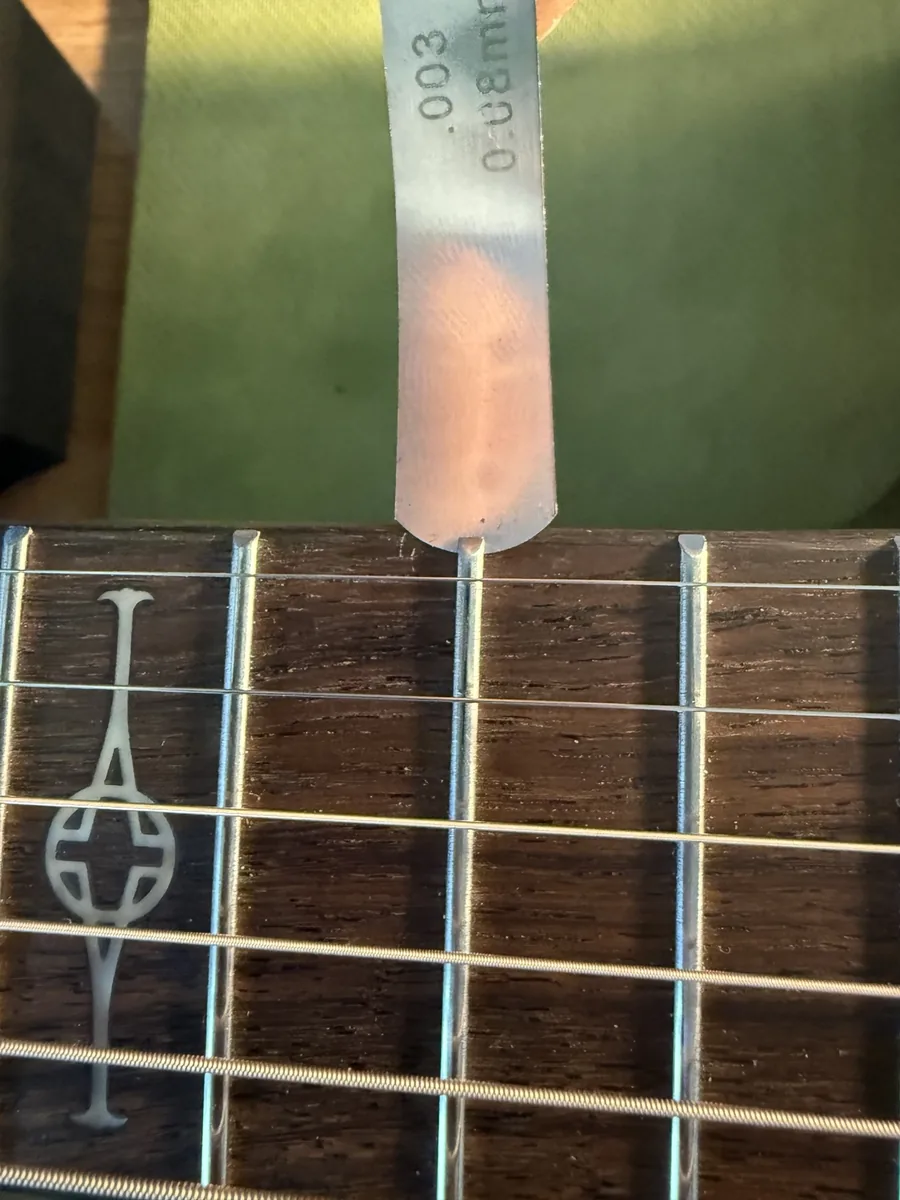
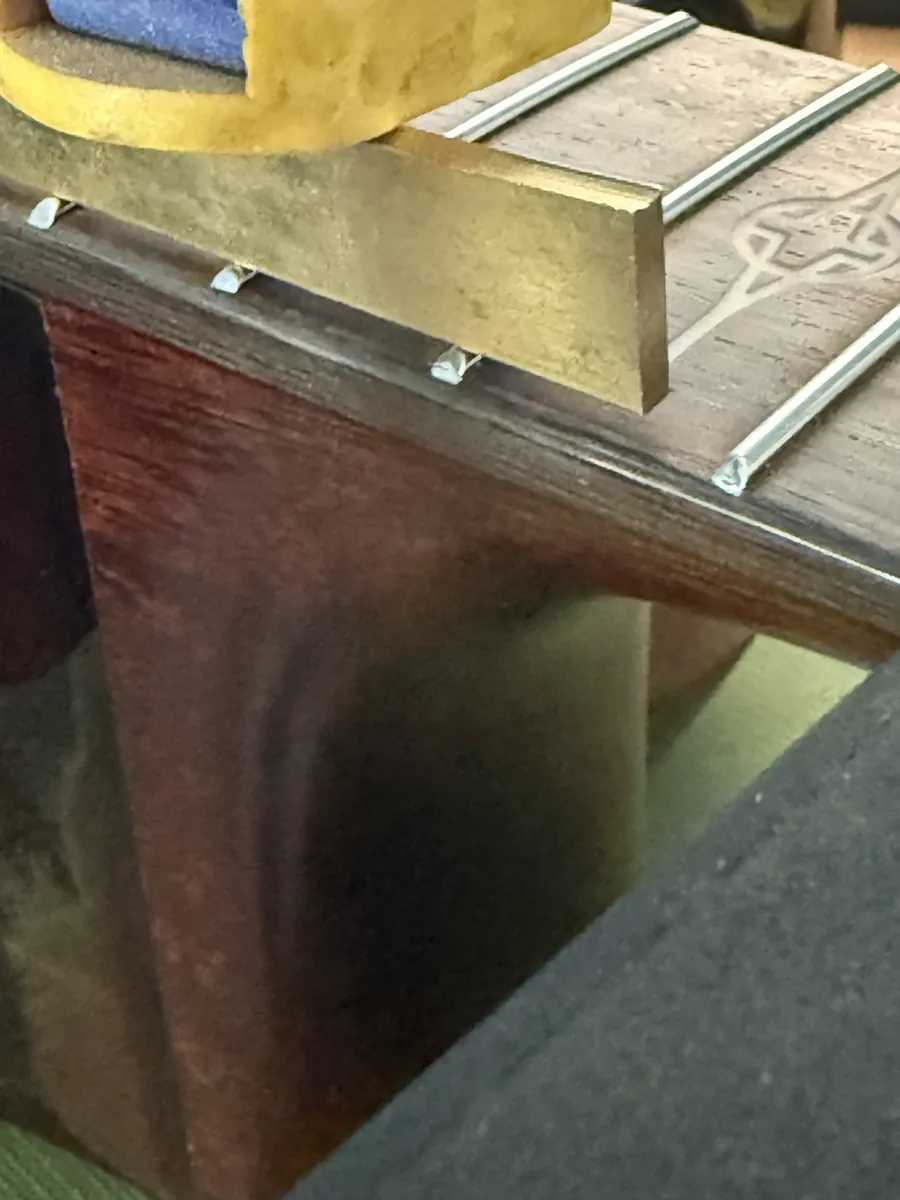
During the inspection, I found that the 13th fret was loose and sitting slightly higher than the neighboring frets.
A loose fret can cause a surprisingly noticeable problem. Frets are supposed to sit firmly in their slots and form a consistent surface along the length of the fingerboard. If one fret begins to lift even slightly, it effectively becomes a high fret. When a string vibrates, it can contact that higher fret instead of clearing it cleanly.
The result can be buzzing, choking notes, or an instrument that seems to require unusually high action just to play cleanly. And because the difference in height may be extremely small, a loose fret isn’t always obvious just by looking at the guitar.
How Can You Tell if a Guitar Has a Loose Fret?
There are several clues I look for when diagnosing fret problems:
- Buzzing that seems concentrated in one small area of the neck
- A fret that visibly sits higher than its neighbors
- Movement or a slight clicking sensation when pressure is applied to the fret
- A fret rocker or straightedge revealing a high point
- A small gap between the fret and the fingerboard
- Buzzing that remains even when the neck relief and action appear reasonable
Reseating the 13th Fret
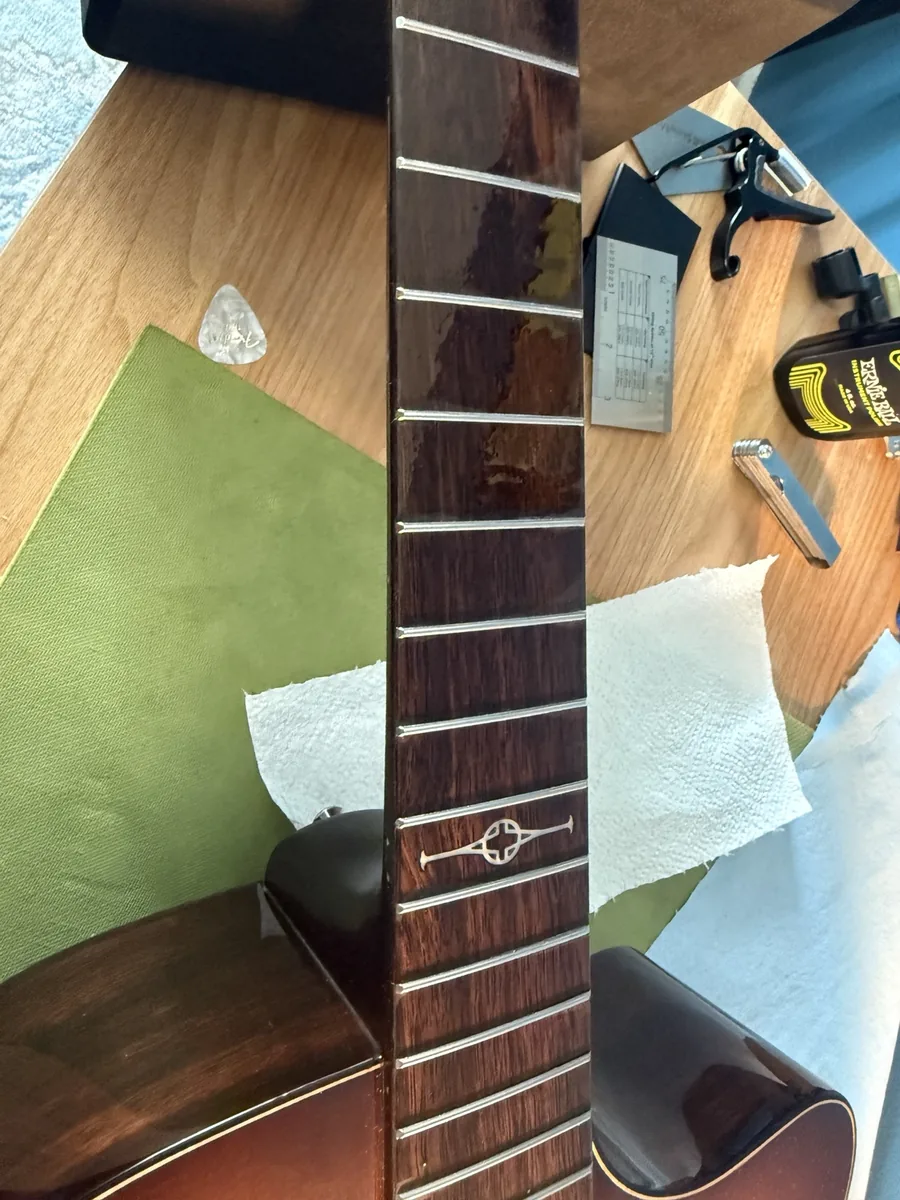
In this case, the fret could be reseated rather than requiring replacement. The fret was carefully glued and pressed back into place, bringing it level with the surrounding frets. Once the adhesive had cured, I could reevaluate the fret plane before moving on to the rest of the setup.
This is an important part of the process, because adjusting the guitar around a loose fret can actually hide the real problem. Raising the action might reduce the buzzing — but now the player has a guitar that’s harder to play while the underlying fret problem still exists.
Whenever possible, I prefer to correct the cause first and then perform the setup around a properly functioning instrument.
A Setup Should Be Based on the Player
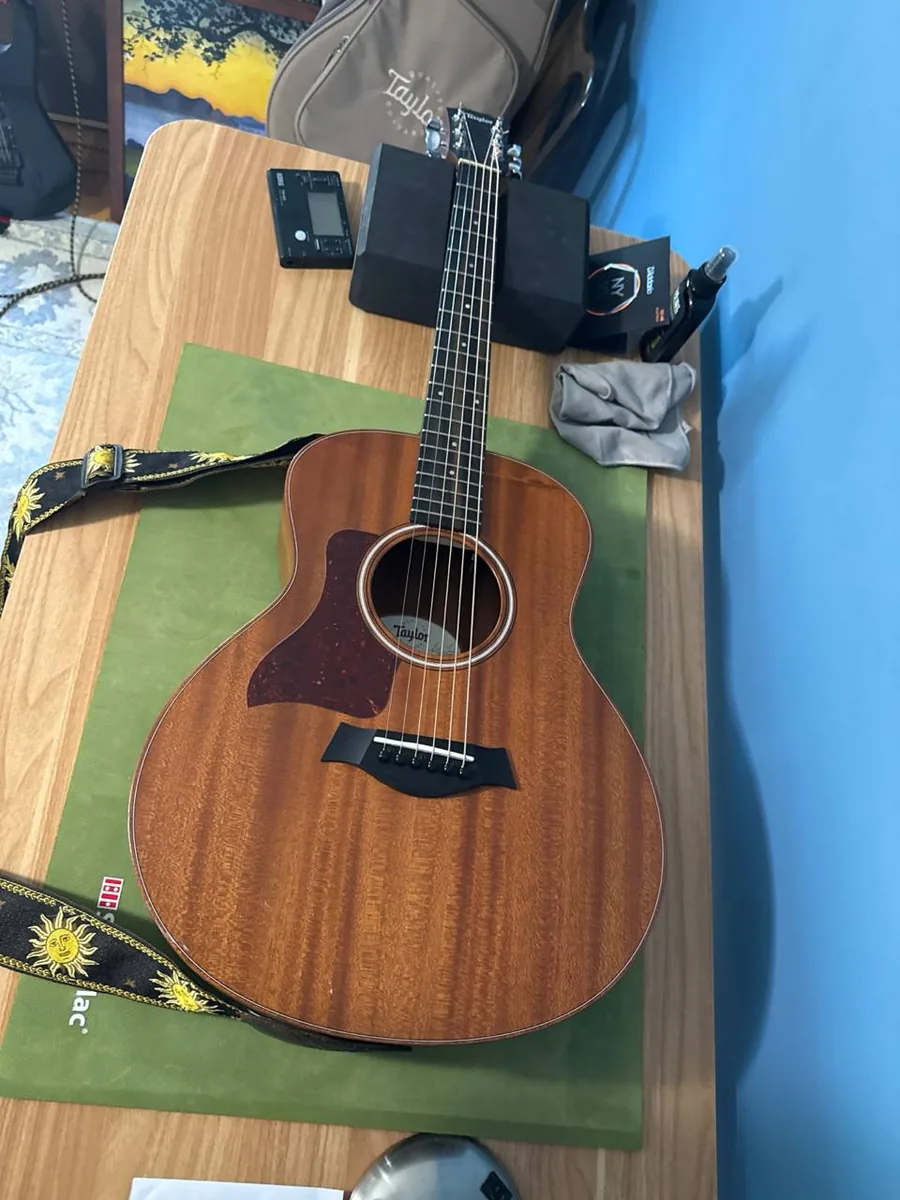
Once the fret issue was corrected, we could move on to dialing in the action and overall feel of the Alvarez. The owner did something that made this process especially easy: he brought along another guitar that he absolutely loves playing.
This is something I recommend whenever possible. Measurements are extremely useful in guitar repair, but there isn’t one perfect setup specification for every guitarist.
Some players have a light touch and prefer very low action. Others play aggressively and need additional clearance to keep the strings from buzzing. Fingerstyle players may want something different from someone primarily strumming with a heavy pick.
Instead of guessing what “comfortable” meant for this player, I could measure the setup of a guitar he already loved. I recorded the important measurements from the Taylor and used them as a target when setting up the Alvarez. That gave us something much more meaningful than simply setting the guitar to a generic factory specification.
Bringing the Action Down
After correcting the fret issue and evaluating the neck, I was able to lower the action on the Alvarez by approximately 1.7 mm. That’s a substantial difference in how an acoustic guitar feels under the fingers.
Lower action reduces the distance the strings have to travel before contacting the frets. That generally means less effort when fretting notes and chords, provided there’s still enough clearance for the strings to vibrate properly.
The goal isn’t simply to get the strings as low as possible. The goal is to find the balance where the guitar feels comfortable, plays cleanly, and suits the player’s technique. Using the owner’s favorite guitar as a reference made finding that balance much easier.
Don’t Forget the Fingerboard and Bridge
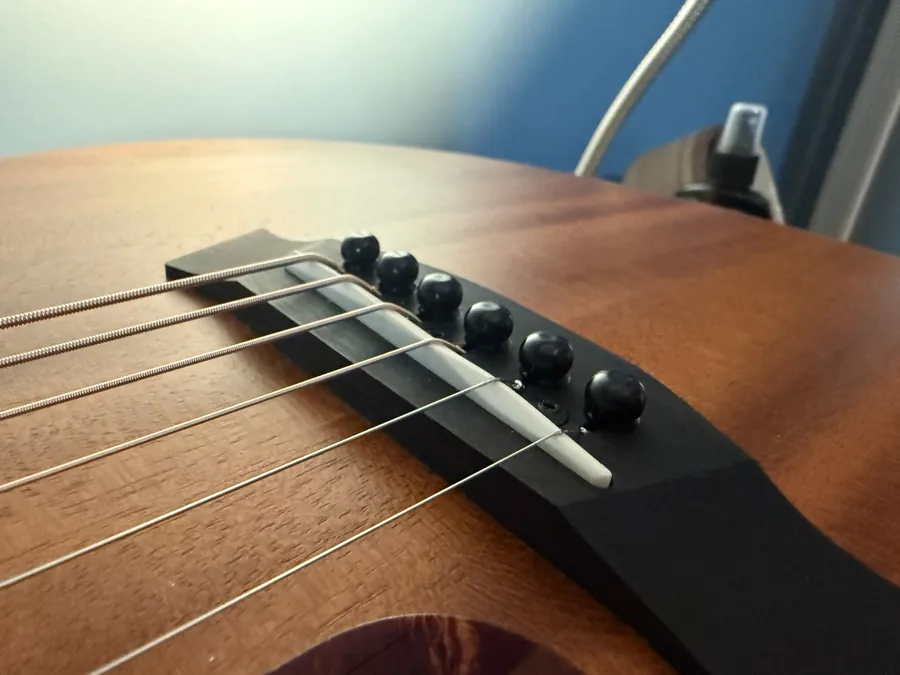
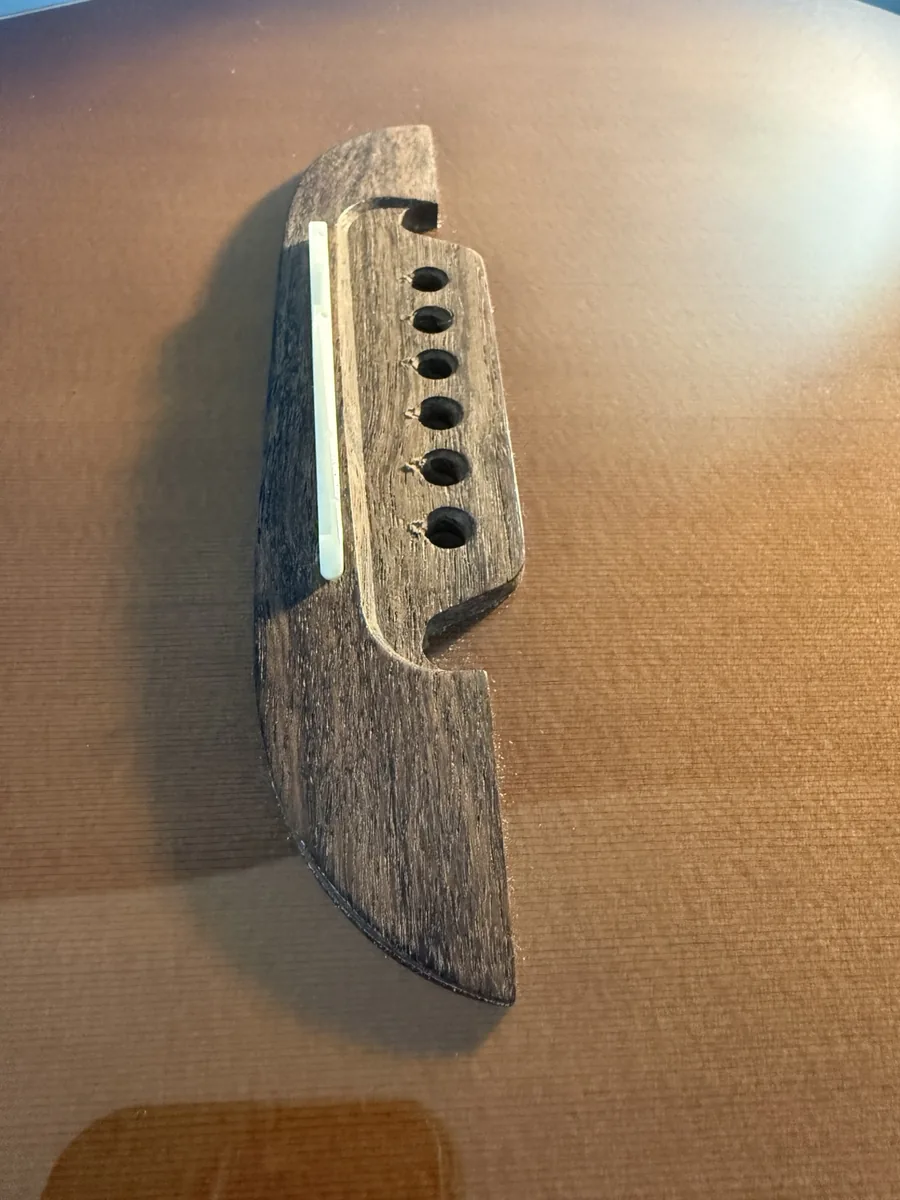
A setup is also a good opportunity to take care of parts of the guitar that don’t receive much attention during normal playing. The fingerboard and bridge on this guitar were ready for some attention, so both were cleaned and conditioned.
These unfinished wood surfaces accumulate dirt, oils, sweat, and grime over time. They can also become noticeably dry depending on the instrument’s environment and how it has been maintained.
Conditioning shouldn’t mean soaking a guitar in oil every few weeks. In fact, excessive oiling isn’t desirable either. But periodic cleaning and appropriate conditioning can help keep unfinished fingerboard and bridge wood in good condition, while also making the instrument feel and look significantly better.
Why Regular Guitar Maintenance Matters
Guitars are built primarily from wood, metal, and adhesives — all materials that respond to time, playing, temperature, humidity, and string tension. Small changes can accumulate gradually enough that you don’t notice them happening.
The action creeps upward. A fret begins to move. The fingerboard dries out. The neck relief changes. A nut slot wears. Intonation slowly becomes less accurate.
Because these changes are gradual, players often adapt to them without realizing it. Then they pick up a properly adjusted guitar and suddenly realize how much harder their own instrument has become to play.
Routine maintenance gives you a chance to catch those problems while they’re still relatively small. It’s also why I generally recommend having an instrument looked over periodically even if nothing is obviously broken — especially a guitar that’s played frequently.
Small Problems Can Have a Big Effect
This Alvarez is a good example of why diagnosing the instrument matters as much as adjusting it. The player’s complaint was fairly simple: it doesn’t play quite right, and it buzzes.
But hidden inside that complaint was a loose 13th fret, a setup that didn’t match the player’s preferences, and a guitar that was ready for some routine maintenance.
Once the fret was secured, the setup could be adjusted properly. Using the owner’s favorite guitar as a reference allowed me to tailor the action specifically to him rather than relying solely on generic measurements.
After lowering the action approximately 1.7 mm and cleaning and conditioning the fingerboard and bridge, the guitar left the bench playing much closer to the instrument the owner already knew and loved.
And that’s really what a good setup should accomplish. Not simply making a guitar meet a specification — but making the guitar work better for the person actually playing it.