When a Guitar Gets Too Dry: Why Humidity Matters for Playability and Long-Term Health
A good setup can make a guitar dramatically easier to play, but sometimes the setup is only part of the story. Acoustic guitars are made from thin pieces of wood, and that wood is constantly responding to the environment around it.
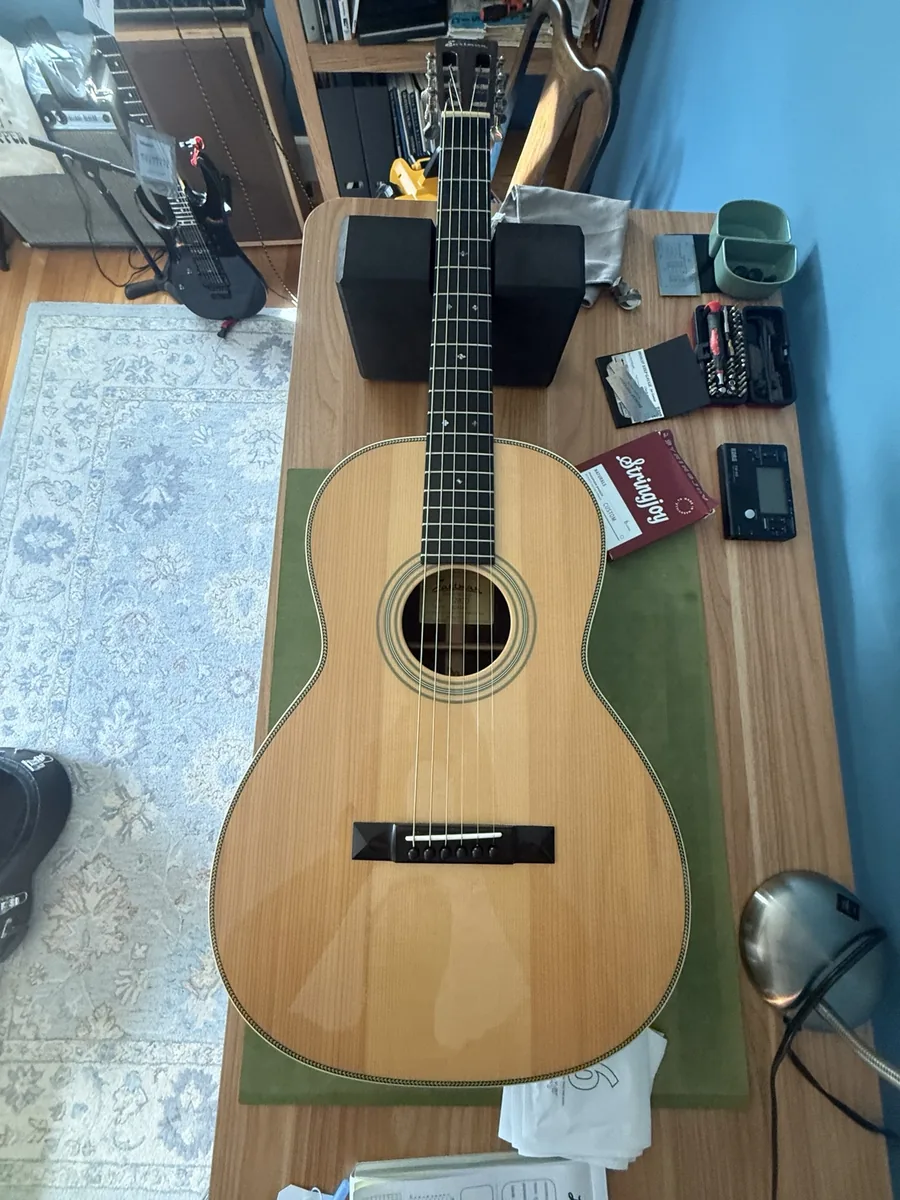
This week I had a well-loved 2015 Eastman E20 OO on the bench. Its owner is 81 years old and still playing regularly, but he told me the guitar had become uncomfortable enough that it was starting to hurt his hands.
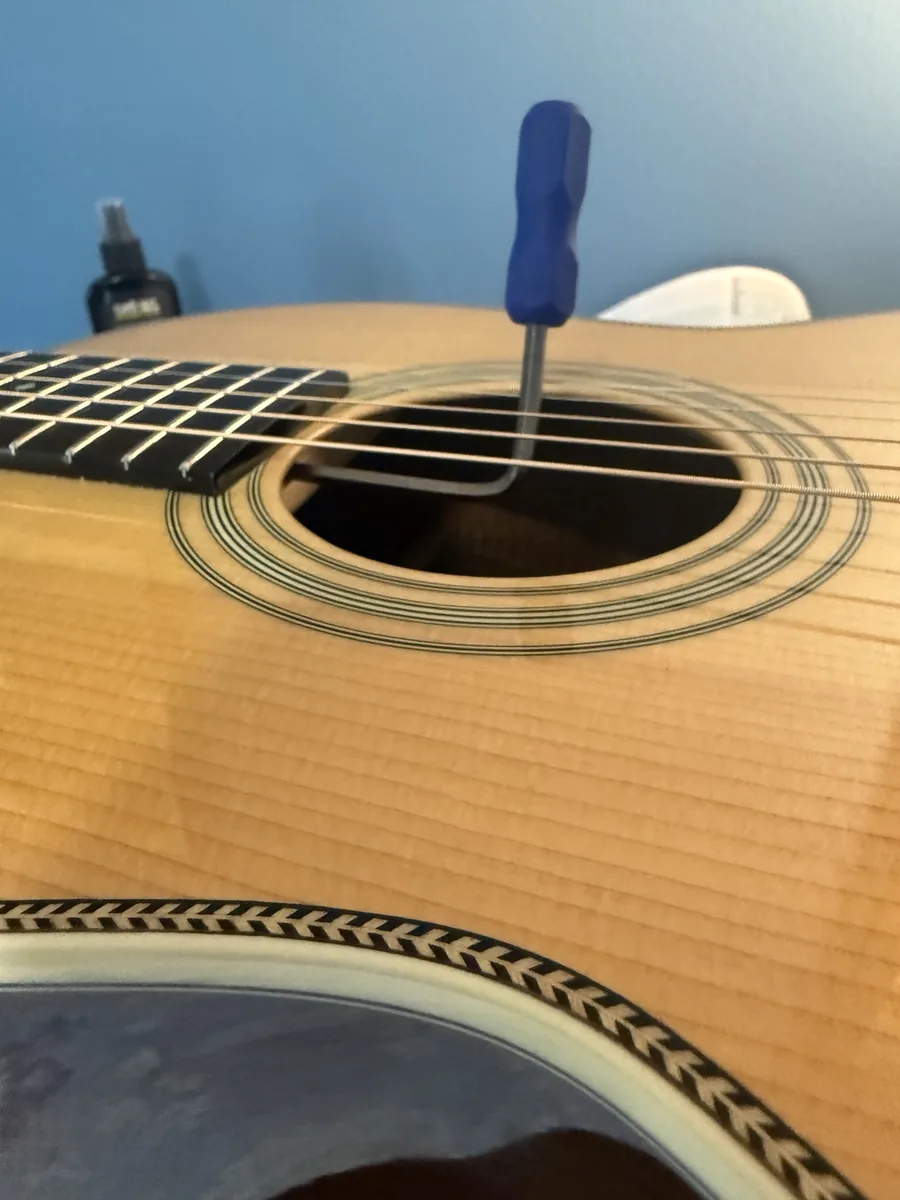
At first glance, the biggest playing issue was the high action. Fortunately, the saddle itself did not need to be lowered. The action was high largely because the neck had too much relief, so correcting the neck relief brought the strings back down to a much more comfortable height.
High Action Does Not Always Mean the Saddle Is Too Tall
When an acoustic guitar feels hard to play, it is tempting to assume the saddle needs to be sanded down. Sometimes that is the correct fix, but not always.
String height is affected by several parts of the guitar working together, including the nut, neck relief, frets, saddle, and even changes in the guitar’s top and bridge over time.
On this Eastman, the neck had more relief than it needed. That extra forward bow raised the strings through the middle of the neck and made fretting notes require more effort.
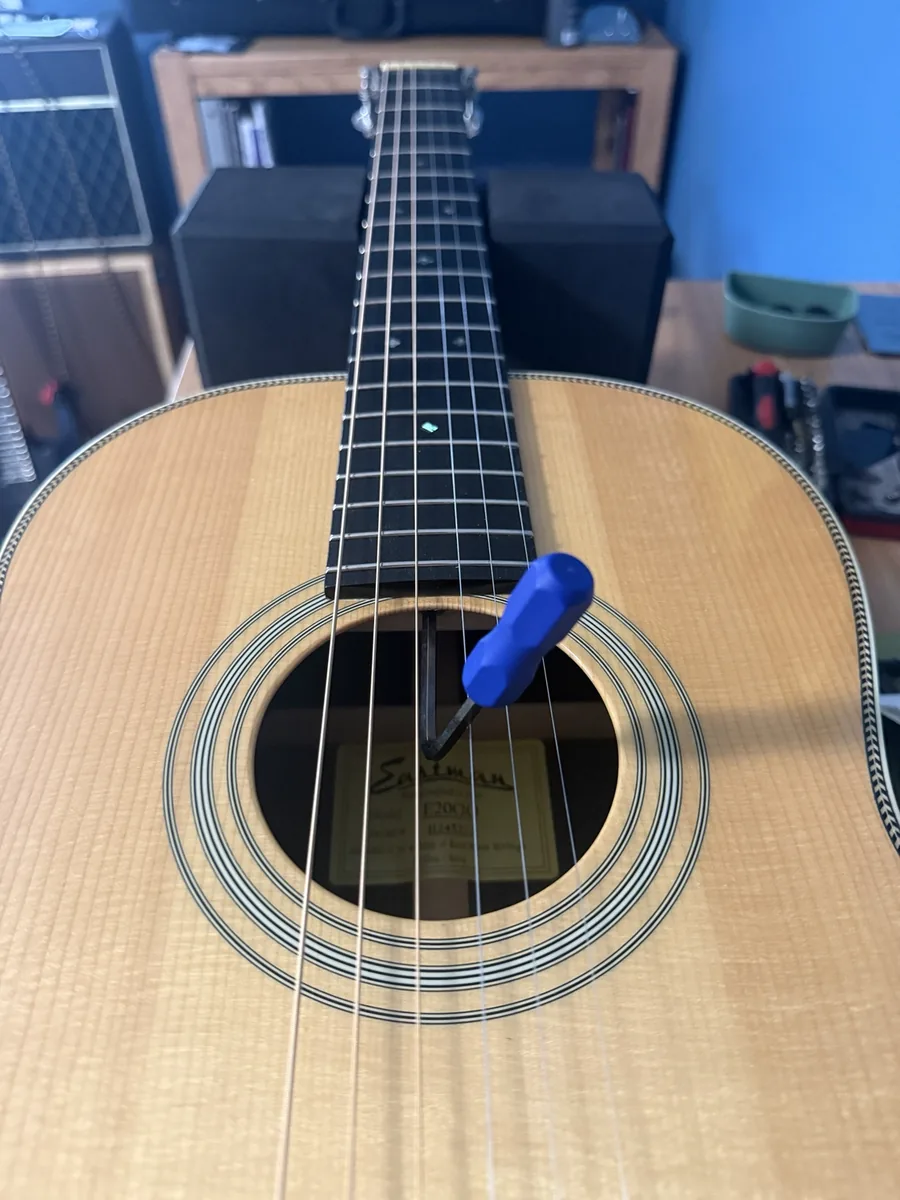
After adjusting the neck, the guitar could be set up around the player rather than forcing the player to fight against the instrument.
The Bigger Clue: Signs the Guitar Had Been Too Dry
While working through the setup, I also found signs that the guitar had spent time in conditions that were too dry.
The fingerboard inlays were sitting slightly proud of the surrounding wood. The inlays themselves had not grown. Instead, the surrounding fingerboard wood had shrunk enough that the inlays could be felt above the surface.
That is one of the reasons humidity control matters so much with acoustic instruments. Wood gains and loses moisture as relative humidity changes. Materials such as shell or synthetic inlays do not move at the same rate, so when the fingerboard dries and shrinks, previously flush inlays can begin to feel raised.
The Bridge and Saddle Can Be Affected Too
The bridge had also shrunk enough that the saddle was no longer as stable in its slot as I wanted it to be. A thin shim was needed to stabilize the saddle and keep it properly supported.
A saddle should fit securely in the bridge slot. If it is too loose, it can lean or move under string tension instead of transferring vibration cleanly and consistently into the bridge and top.
In this case, the important point was not to lower the saddle. The action problem was being caused by neck relief, while the saddle needed attention for a completely different reason: the bridge itself had changed dimensionally from dryness.
That distinction matters: two symptoms can exist on the same guitar without having the same cause. Good repair work is about diagnosing each problem before removing material or making an irreversible adjustment.
What Is the Right Humidity for an Acoustic Guitar?
For most acoustic guitars, a relative humidity range of roughly 45% to 55% is a good target. The goal is not to hit one exact number every minute of the day, but to avoid long periods of very dry or very humid conditions and large swings back and forth.
When a guitar stays too dry for too long, the wood can shrink. Depending on the instrument, that may show up as:
- Raised or “proud” fingerboard inlays
- Sharp fret ends or fret sprout
- Changes in neck relief and action
- A loose-feeling saddle fit
- A sinking or changing top
- Finish checking or separation around joints
- In severe cases, cracks in the top, back, or sides
Too much humidity can cause a different set of problems, including swelling, higher action, and changes in how the top responds. The key is stability.
Simple Ways to Protect an Acoustic Guitar
You do not need an elaborate climate-controlled room to take good care of an acoustic guitar. A few simple habits go a long way.
- Keep a small digital hygrometer where the guitar is stored.
- If the room gets very dry, use a room humidifier or a properly used guitar humidification system.
- Store the guitar in its case when humidity is difficult to control.
- Avoid placing the guitar directly beside HVAC vents, heaters, exterior doors, or sunny windows.
- Do not over-humidify a dry guitar in an attempt to fix it quickly; gradual, controlled correction is better.
- Have the guitar inspected if you notice sudden changes in action, sharp fret ends, raised inlays, or visible cracking.
One of the easiest mistakes to make is judging humidity by how the room feels to you. A room can feel perfectly comfortable to a person while still being too dry for an acoustic guitar. A hygrometer removes the guesswork.
Making the Guitar Easier on the Player
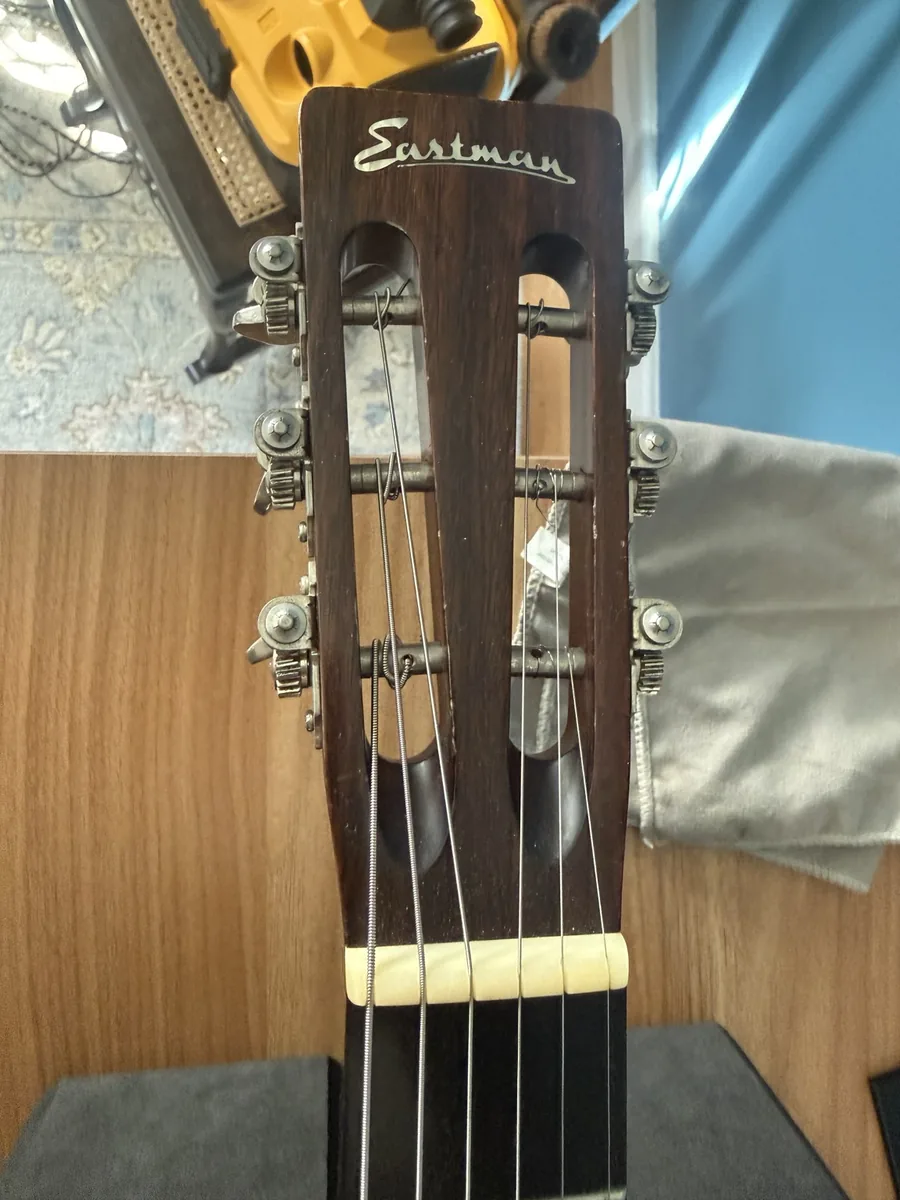
Once the underlying issues were identified, the Eastman received a complete setup, the frets were polished, and it was restrung with Stringjoy ultralight strings.
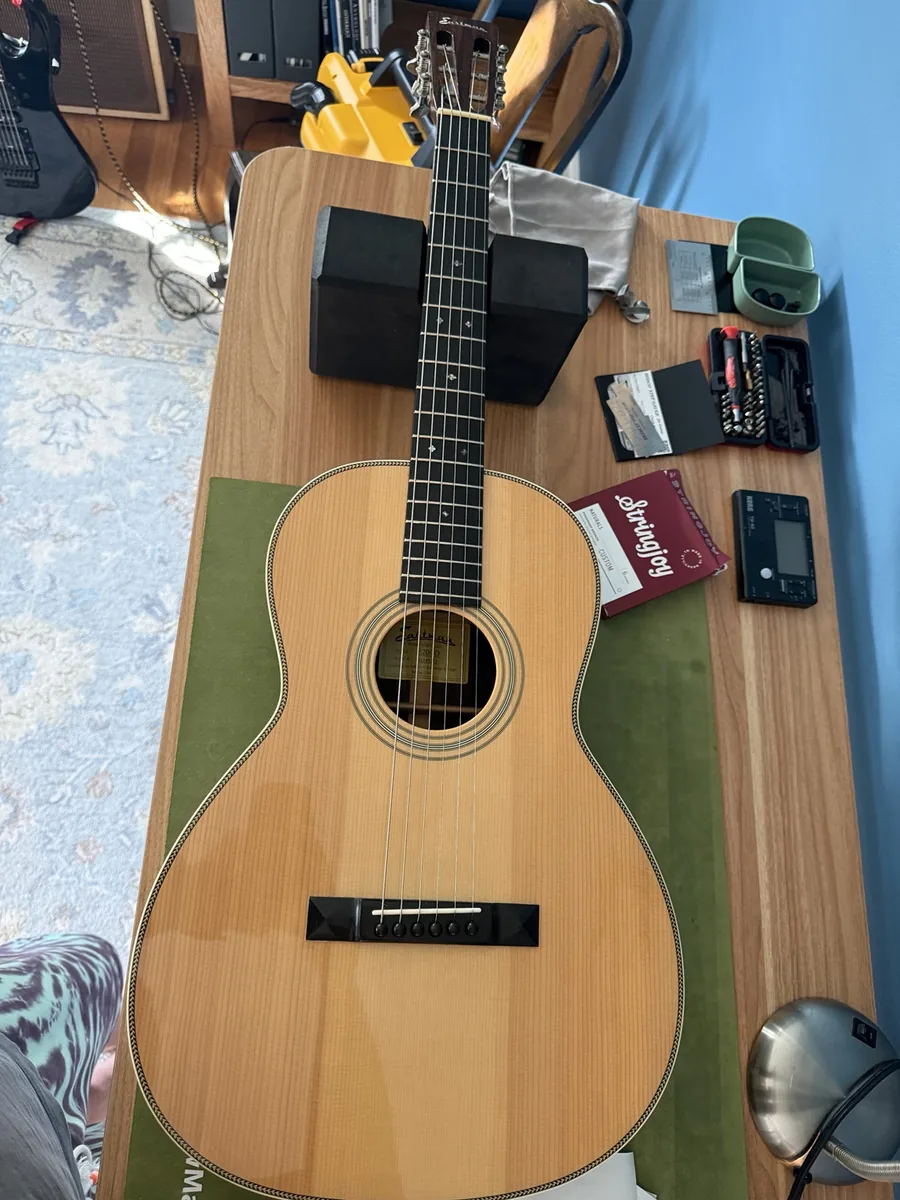
For an older player, or really any player dealing with hand fatigue, small reductions in string height and tension can make a big difference. The goal is to make the guitar work with the player rather than asking the player to compensate for an instrument that has drifted out of adjustment.
After the setup, the guitar played comfortably again and felt much more responsive under the hands.
Why Regular Maintenance Matters
This Eastman is a great example of why a setup should include more than simply measuring the string height.
The guitar had high action, but the saddle did not need to be lowered. The neck relief needed correction. At the same time, the raised inlays and loose saddle fit were pointing toward a separate issue: the effects of low humidity on the wood.
If the saddle had simply been sanded lower without addressing the neck, the real setup problem would still have been there. And if the humidity-related changes had been ignored, the guitar could continue to move and potentially develop more serious problems.
A well-maintained acoustic guitar should be comfortable to play, structurally stable, and able to respond the way it was designed to. Regular setups and sensible humidity control are two of the best ways to keep it that way.